US Forces Deployment Cost in the Caribbean Nears $3 Billion
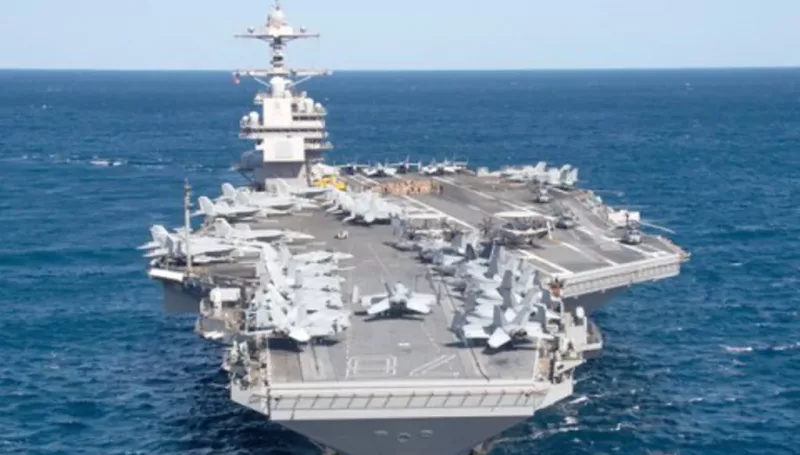
Bloomberg calculations indicate that the US forces deployment cost in the Caribbean has climbed sharply, even as the White House argues the movements did not add new burdens for taxpayers because many units were already deployed.
US forces deployment cost rises as operations expand
According to the analysis, the US forces deployment cost peaked between mid-November and mid-January, when operational expenses for deployed ships exceeded $20 million per day at the height of the build-up.
The tally is driven by flight hours, munitions, and additional payments tied to combat or surge activity, pushing real-world spending above baseline planning assumptions.
Mark Cancian of the Center for Strategic and International Studies said the Pentagon has no standing “emergency fund” for unexpected operations, meaning conflicts create incremental costs even when core funding lines already exist.
“Southern Spear” build-up and constrained assets
The analysis describes a late-summer build-up of warships, fighters, drones, and logistics vessels around Latin America under a mobilization dubbed “Southern Spear.” At its peak, the deployment represented about 20% of the Navy’s surface fleet, tying up high-value assets as other global crises intensified.
USS Gerald R.
Ford at the center of the math
Bloomberg’s breakdown highlights the aircraft carrier USS Gerald R.
Ford as one of the largest daily cost drivers.
Leading a carrier strike group that can include destroyers, cruisers, and submarines, the carrier’s presence—along with escorts—was estimated at about $11.4 million per day, based on operating-cost data and US budget references used in the calculations.
The analysis adds that amphibious ready groups and supporting elements further increased daily totals, with an estimate of $8.59 million per day for formations involving ships such as USS Iwo Jima, USS Fort Lauderdale, and USS San Antonio, alongside Marine units.
Logistics and support ships were estimated to add roughly $1 million per day.
Estimate: about $2 billion since August 2025
Elaine McCusker, a former Pentagon comptroller now at the American Enterprise Institute, said public-data-based estimates suggest “Southern Spear,” including related Caribbean operations, may have cost about $2 billion since August 2025.
She noted the estimate focuses on additional operating costs for ships, aircraft, and remotely piloted platforms, plus potential munitions replacement, and does not include intelligence, targeting support, cyber assistance, or rehearsals.
Opportunity cost: what happens when assets are “unavailable”?
Beyond the headline numbers, the analysis emphasizes an opportunity cost: assets committed to the Caribbean are not available elsewhere.
The report notes USS Gerald R.
Ford was redirected from a Mediterranean deployment in October 2025, and amphibious groups initially slated for Europe were reassigned to the Caribbean.
With official narratives varying on scope and duration, the analysis concludes the US forces deployment cost in the Caribbean remains high and fluid, depending on tempo, the size of the force package, and how long the deployment continues without a clear end date.